
- About Us

- Our Services
- Your Industry
- Resources
- News & Blog
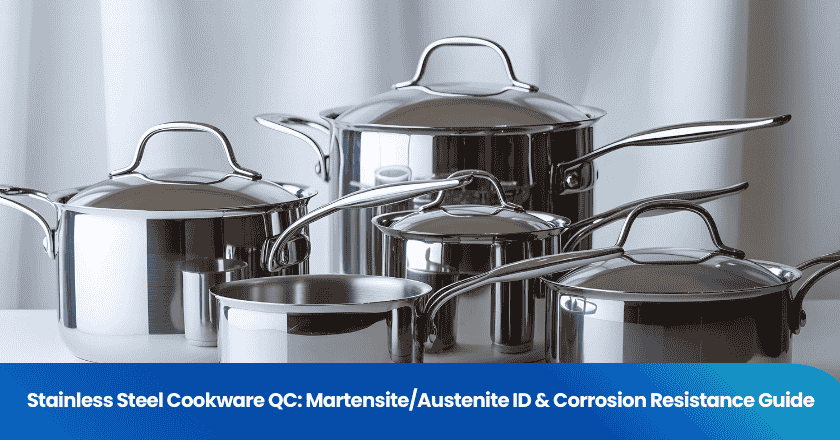
Understanding the type of stainless steel used in cookware is crucial for ensuring product safety, performance, and longevity. The market is dominated by two main categories: austenitic and martensitic steel. Austenitic grades, such as 304 and 316, are renowned for their corrosion resistance and formability, making them ideal for pots and pans. In contrast, martensitic steel, while harder and magnetic, is less resistant to rust but excellent for knife blades. Verifying these materials through rigorous quality control protects consumers and enhances brand reputation.

Key Takeaways
- Identify cookware type using the magnet test. If a magnet sticks, it's likely martensitic steel; if not, it's probably austenitic (300-series).
- Check grade labels stamped on the product. Grades 304 and 316 offer superior corrosion resistance for cooking surfaces.
- Use visual cues: Austenitic steel is typically shinier and used for bodies, while martensitic is duller and used for blades.
- Conduct salt spray testing to verify corrosion resistance claims, especially for "dishwasher safe" products.
Identifying Stainless Steel Cookware Types
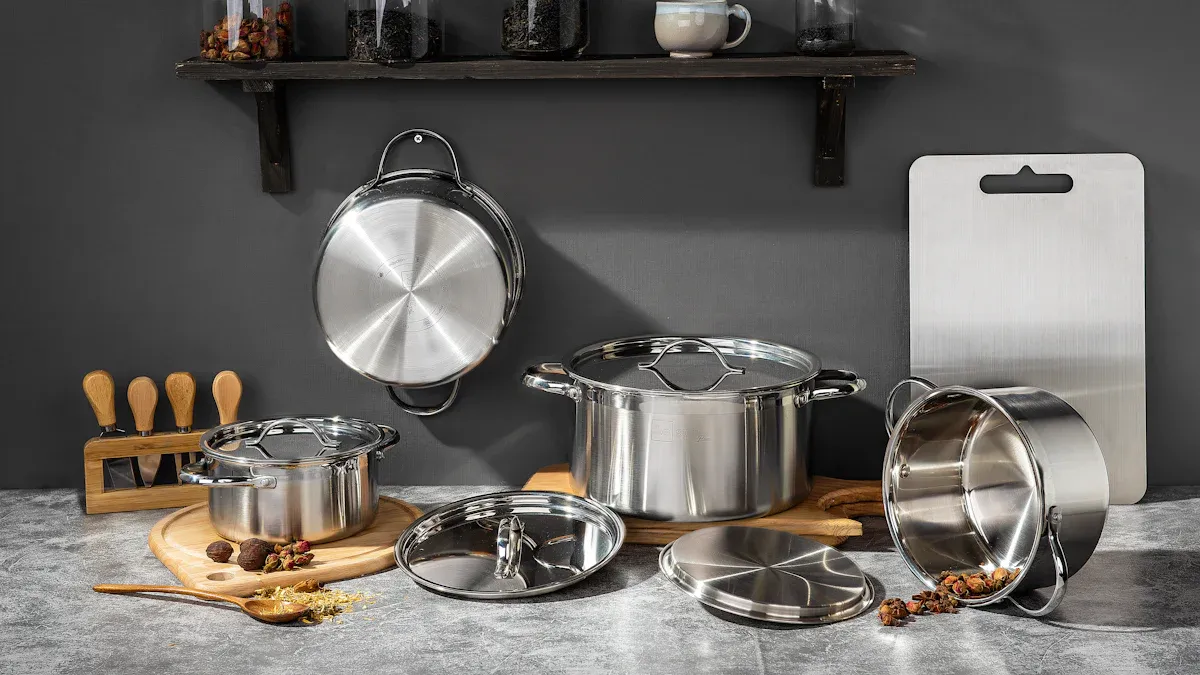
Magnet Test Method
The simplest way to distinguish between steel types is the magnet test. Austenitic stainless steel (e.g., 304, 316) is generally non-magnetic due to its high nickel content and face-centered cubic structure. Martensitic (e.g., 400-series) and ferritic steels are magnetic.
- Magnet Sticks: Likely Martensitic or Ferritic (lower corrosion resistance).
- Magnet Does Not Stick: Likely Austenitic (higher corrosion resistance).
Tip: Some austenitic cookware may show weak magnetism if it has been cold-worked (stamped/bent), so this test should be part of a broader inspection.
Label and Grade Check (304, 316, etc.)
Material grade markings provide definitive proof of composition. Common grades include:
| Grade Label | Composition | Characteristics |
|---|---|---|
| 304 (18/8 or 18/10) | 18% Cr, 8-10% Ni | Standard for high-quality cookware; excellent corrosion resistance. |
| 316 (18/10 + Mo) | Added Molybdenum | Superior resistance to salt/acid; often used in marine or medical applications. |
| 430 (18/0) | 18% Cr, 0% Ni | Magnetic; moderate corrosion resistance; used for induction bottoms. |
Quality assurance services often employ chemical analysis (XRF guns) to verify these compositions precisely, ensuring suppliers aren't substituting cheaper materials.
Visual and Physical Clues
Austenitic steel often has a brighter, more reflective polish compared to the slightly duller, greyish tone of martensitic steel. Additionally, austenitic steel is more ductile, allowing for deep-drawn shapes like pots, while martensitic steel is brittle and hard, suitable for knife edges.
Martensitic vs. Austenitic Steel in Cookware
Composition and Structure
The primary difference lies in the nickel content and crystal structure.
| Type | Key Elements | Properties |
|---|---|---|
| Austenitic | High Chromium & Nickel | Non-magnetic, tough, excellent corrosion resistance. |
| Martensitic | Chromium, No Nickel, High Carbon | Magnetic, very hard, moderate corrosion resistance. |
Hardness and Durability
Martensitic steel can be heat-treated to achieve high hardness, making it essential for items that must hold an edge. Austenitic steel cannot be hardened by heat but work-hardens. It excels in toughness and resistance to denting.
Typical Kitchenware Applications
Manufacturers select the steel type based on the item's function:
- Austenitic (304/316): Pots, pans, bowls, sinks (where rust resistance is paramount).
- Martensitic (410/420): Knife blades, shears (where hardness/cutting ability is paramount).
- Ferritic (430): Induction-compatible base plates.
Corrosion Resistance in Stainless Steel Cookware
Salt Spray and Damp Heat Testing
To verify durability claims like "dishwasher safe" or "rust-proof," manufacturers use accelerated corrosion tests.
- Salt Spray Test (ASTM B117): Exposes cookware to a saline fog for 24-96 hours to simulate years of exposure to salty foods and environments.
- Damp Heat Test: Subjects items to high humidity and temperature to check for intergranular corrosion susceptibility.
| Test Parameter | Standard Condition |
|---|---|
| Salt Solution | 5% NaCl concentration |
| Temperature | 35°C (95°F) |
| Duration | 24h - 96h (depending on grade) |
Washing Durability and Everyday Use
Cookware faces daily aggression from acidic foods (tomatoes, lemon), salt, and high heat. QC tests simulate these by boiling acetic acid or salt solutions in the cookware for specified periods to check for pitting or heavy metal leaching.
Proper care instructions often advise against adding salt to cold water (which causes pitting) and recommend hand washing to preserve the finish, although high-grade austenitic steel handles dishwashers well.
Choosing Cookware Based on Material and Resistance
Matching Material to Cooking Needs
For general home use, 304 grade (18/8 or 18/10) is the gold standard, balancing cost and performance. For coastal areas or professional kitchens using harsh cleaners, 316 grade offers necessary extra protection.
| Aspect | Martensitic | Austenitic |
|---|---|---|
| Cost | Lower to Medium | Higher (due to Nickel) |
| Durability | High hardness, brittle | High toughness, dent-resistant |
| Rust Resistance | Moderate | Excellent |
In summary, distinguishing between martensitic and austenitic stainless steel is vital for quality control in cookware. Austenitic grades provide the corrosion resistance needed for safe food contact surfaces, while martensitic grades offer the hardness required for cutting tools. By employing magnet tests, verifying grade markings, and conducting salt spray corrosion tests, manufacturers and buyers can ensure they are transacting high-quality, durable kitchenware.
FAQ
What makes stainless steel cookware suitable for marine and chemical environments?
Grade 316 stainless steel contains molybdenum, which specifically enhances resistance to chlorides (salt) and acids, making it essential for marine environments where standard 304 might pit.
Can duplex stainless steel be used for cookware?
Yes, but it is rare in consumer cookware due to cost. It offers higher strength and excellent corrosion resistance, used mostly in industrial food processing.
Why is grade 316 stainless steel preferred in marine kitchens?
The salty sea air accelerates corrosion. Grade 316's molybdenum content prevents the "tea staining" rust often seen on lower grades in these conditions.
Is stainless steel cookware safe?
Yes, high-quality austenitic stainless steel (304/316) is chemically stable and does not leach harmful amounts of metal, making it one of the safest options for food preparation.

Related Articles
Grow your business with TradeAider Service
Click the button below to directly enter the TradeAider Service System. The simple steps from booking and payment to receiving reports are easy to operate.
