
- About Us

- Our Services
- Your Industry
- Resources
- News & Blog
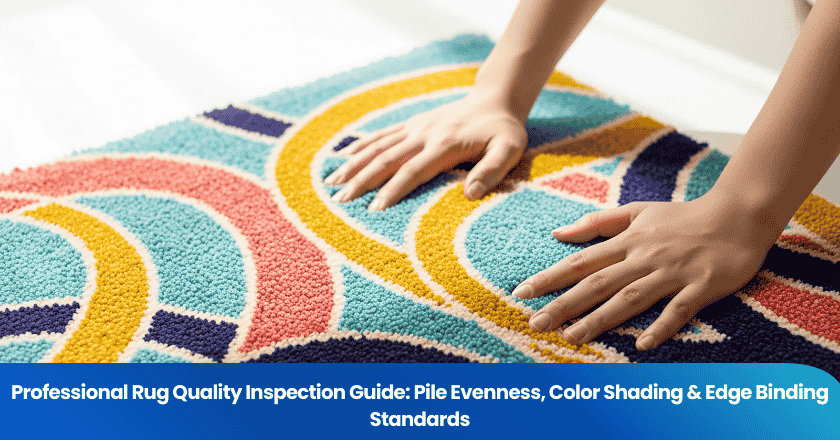
Professional rug inspection serves as a critical checkpoint in the global textile supply chain, ensuring that every area rug and carpet meets the rigid aesthetic and structural standards required by high-end retailers and consumers. Unlike standard garments, rugs are complex multi-dimensional products where pile evenness, metamerism in color shading, and the structural integrity of edge binding define the product's lifespan and market value. Through comprehensive quality checks, inspectors mitigate risks such as pile reversal, bleeding dyes, and edge fraying before items are palletized for shipment.
Key Takeaways
- Pile Uniformity: Consistency in pile height and density prevents 'watermarking' and ensures ergonomic comfort.
- Color Science: Utilizing spectrophotometers and Pantone standards is essential to manage metamerism and dye-lot variations.
- Structural Edges: Binding and serging quality must be checked for 'Overlock Tension' to prevent long-term unraveling.
- AQL Grading: Utilizing Acceptable Quality Limits allows for systematic classification of minor, major, and critical defects.
- Digital Traceability: Real-time reporting enables on-site rectification and transparent factory-to-buyer communication.
Technical Assessment of Pile Evenness and Density
The 'pile' refers to the upright loops or cut strands of yarn that form the surface of a rug. Pile evenness is not merely a visual preference; it is a technical metric of the weaving process's precision. For machine-made rugs, uneven pile height often indicates a malfunction in the shearing blades or inconsistent tension in the loom. For hand-knotted rugs, it reflects the artisan's skill in knotting and finishing.
Measuring Pile Height and Points Per Square Meter
Inspectors utilize a depth gauge to measure pile height at multiple points across the rug's surface. Standard tolerances usually fall within +/- 1.5mm of the approved 'Golden Sample.' Beyond height, inspectors audit the 'Pile Density'—calculated as knots or points per square meter. A lower density than specified can lead to 'Pile Crush' where the fibers flatten permanently under foot traffic.
| Pile Metric | Common Defect | Impact on Rug Quality |
|---|---|---|
| Height Consistency | Levelness Deviations | Causes visual 'Step-off' effects and uneven wear. |
| Fiber Density | Sparseness / Grinning | Exposes the backing material; reduces plushness. |
| Yarn Twist | Unravelling / Fraying | Leads to 'Shedding' and loss of texture definition. |
| Pile Orientation | Pile Reversal (Shading) | Creates localized light/dark patches (watermarking). |
"True pile evenness is achieved when light reflects uniformly across the entire surface. Any dip or ridge in the pile acts as a shadow-trap, devaluing the rug's aesthetic appeal."
Rug Color Shading and the Science of Metamerism
In the world of textiles, 'Color Shading' is the most frequent cause of customer returns. Rugs often exhibit 'Metamerism'—a phenomenon where two colors appear to match under one light source (like factory LED) but look vastly different under another (like home incandescent light). Professional quality assurance protocols require viewing samples under a standardized Light Box using D65 (daylight) and TL84 (store light) settings.
Managing Dye-Lot Variations and Abrash
For hand-made rugs using natural wool, 'Abrash' (natural tonal shifts) is often considered an authentic feature. However, for commercial or contract-grade rugs, color must be 100% uniform. Inspectors utilize spectrophotometers to calculate the 'Delta E' value—a numerical measure of color difference. A Delta E greater than 1.0 is typically unacceptable for modern retail standards.
| Color Test | Industrial Standard | Evaluation Method |
|---|---|---|
| Crocking Resistance | AATCC 8 / ISO 105-X12 | Rubbing dry/wet white cloth to check for dye transfer. |
| Light Fastness | ISO 105-B02 | Exposure to Xenon arc light to simulate sunlight fading. |
| Dye Migration | Bleeding Test | Testing if darker yarns bleed into lighter areas during washing. |
| Hue Consistency | Pantone TPX/TCX | Visual comparison against a physical swatch card. |
Edge Binding and Serging Quality Control
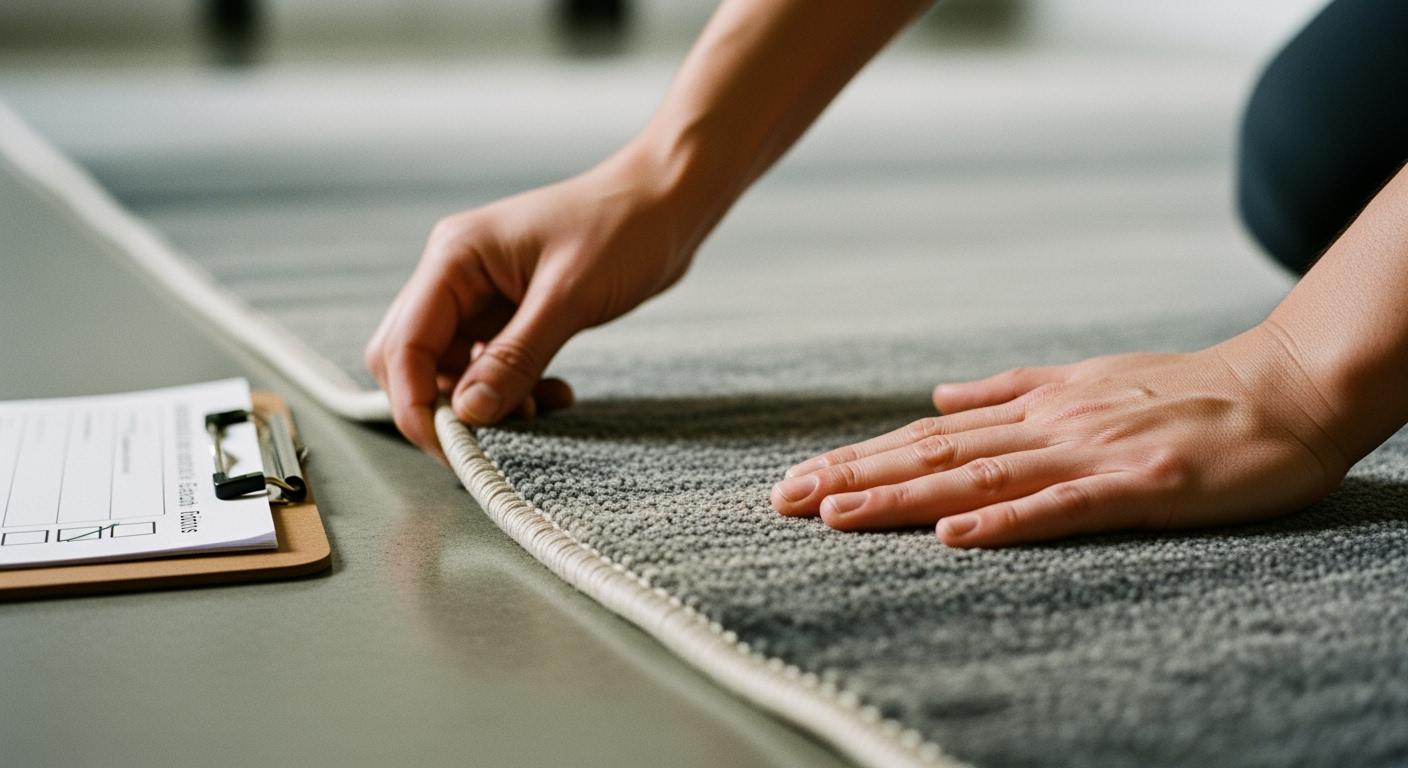
The edge binding, also known as 'Serging' or 'Overlocking,' is the structural frame of the rug. It is responsible for containing the pile and preventing the backing from unravelling. A failed edge is a critical defect that can lead to the entire rug disintegrating over time.
Key Inspection Points for Rug Edges
- Stitch Tension: If the tension is too loose, the binding will 'loop' and catch on furniture. If too tight, the rug will 'bowl' or pucker.
- Coverage: The yarn used for serging must completely cover the backing material without any 'gaps' or 'needle-holes' showing.
- Backing Adhesion: For tufted rugs, the secondary backing must be securely glued to the edges. Inspectors check for 'delamination' (peeling).
- Corner Integrity: Corners must be reinforced with extra stitches to prevent 'curling.'
| Binding Method | Visual Standard | Durability Ranking |
|---|---|---|
| Hand-Serging | Textured, artisanal look. | High (Best for wool rugs). |
| Machine-Overlock | Uniform, tight stitching. | Medium (Standard for synthetic rugs). |
| Canvas Binding | Clean, folded fabric edge. | High (Best for sisal or seagrass rugs). |
The Modern Approach: Digital Oversight and Real-Time Reporting
The traditional paper-based rug inspection is prone to delays and errors. Modern quality control inspections now utilize mobile-first digital platforms. At TradeAider, clients not only receive an official inspection report within 24 hours, but can also gain visibility into inspection progress and identified issues via TradeAider’s online service system. During inspections, inspectors use mobile devices to record key quality aspects—such as pile integrity, pile height, edge finishing, backing strength, color consistency, dimensional accuracy, and metal detection. They can also capture photos and videos of defects, including critical issues like broken needles, which are instantly uploaded to the cloud dashboard.
This allows brands to monitor on-site rectification efforts in real time and make timely decisions—whether to accept products commercially, request corrections with the support of TradeAider inspectors, or reject batches before shipment. By ensuring only quality-approved rugs are packed, shipped, and paid for, TradeAider helps brands reduce losses, prevent defective goods from entering the supply chain, and maintain consistent product standards.
AQL (Acceptable Quality Limit) for Rug Shipments
When conducting a Final Random Inspection (FRI), the auditor pulls a statistically significant sample based on the total order size. Defects are classified as follows:
- Critical: Hazards like sharp objects, needles, or high VOC odors. (Acceptance = 0).
- Major: Visible pile missing, severe color bleeding, or incorrect dimensions. (Rejection based on AQL 2.5).
- Minor: Slight yarn loops or non-visible backing scuffs. (Rejection based on AQL 4.0).
Best Practices for Rug Manufacturing and Sourcing
To maintain consistent quality, importers should provide a clear 'Product Specification Sheet' that includes pile weight (grams per sq meter), yarn count, and specific color codes. Furthermore, implementing an 'Inline Inspection' when the first 10% of the order is completed can identify systemic issues with dye lots or loom settings before the entire order is produced.
| Manufacturing Stage | Inspection Priority | Corrective Action |
|---|---|---|
| Raw Material Audit | Yarn moisture & Dye-lot match. | Reject off-shade yarn batches. |
| Weaving / Tufting | Pattern alignment & Pile density. | Adjust loom tension or machine speed. |
| Finishing & Shearing | Pile height evenness & Cleaning. | Re-shear uneven areas or vacuum thoroughly. |
| Binding & Packing | Stitch quality & Label accuracy. | Re-bind loose edges; update labels. |
Ready to secure your product quality before shipment?
As your third-party inspection, testing & certification partner in China, TradeAider supports brands and sourcing teams across the entire production process, helping you identify quality risks early, ensure compliance, and strengthen your team’s capabilities before shipment.
Book an Inspection or Testing Service with TradeAider today, or for tailored solutions and expert guidance, contact us at services@tradeaider.com.
FAQ
What causes 'Shedding' in new rugs, and is it a defect?
Shedding is common in hand-tufted wool rugs where short fibers are trapped in the pile. It is usually not a defect unless it continues excessively after 6 months of use, which would indicate poor yarn quality or a lack of density.
How do you differentiate between 'Abrash' and 'Dye Streaks'?
'Abrash' is a horizontal shift in color caused by different wool batches and is prized in hand-knotted rugs. 'Dye Streaks' are typically vertical and indicate poor dye penetration or uneven chemical application, which is a major defect.
Why do some rugs smell like 'Burnt Plastic' or 'Chemicals'?
This is usually 'Off-gassing' from the latex adhesive used in the backing. Professional rug inspection includes a 'Smell Test' to ensure VOC levels meet safety regulations such as REACH or Prop 65.
What is 'Orange Peel' in carpet backing?
Orange peel refers to an uneven, bumpy texture in the latex backing. This is a finishing defect that can cause the rug to not lay flat on the floor, creating a tripping hazard.
Can a rug with 'Pile Reversal' be fixed?
Generally, pile reversal (shading) is a permanent structural change in the fiber orientation. While steaming can temporarily reset the pile, it is often considered an inherent characteristic of high-pile plush rugs rather than a manufacturing defect.
Related Articles
Grow your business with TradeAider Service
Click the button below to directly enter the TradeAider Service System. The simple steps from booking and payment to receiving reports are easy to operate.