
- About Us

- Our Services
- Your Industry
- Resources
- News & Blog

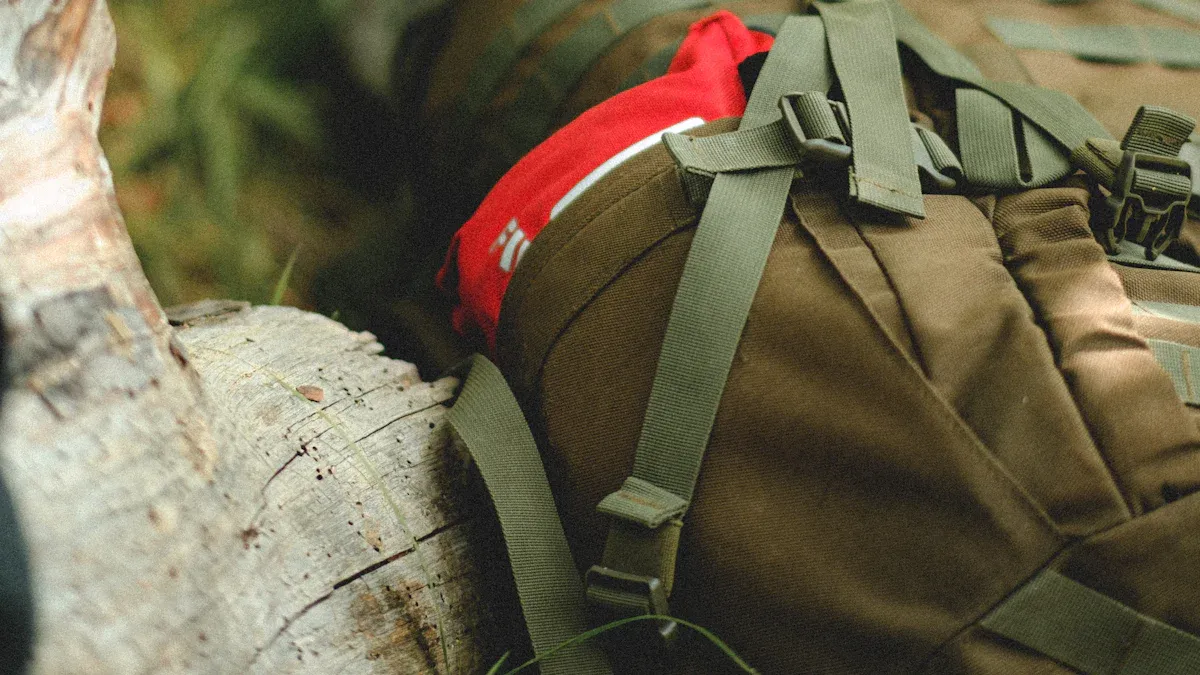
Quality Control (QC) for outdoor backpacks combines Hardline and Softline testing protocols to rigorously evaluate strap load-bearing capacity and zipper durability. Inspectors assess the tensile strength of straps and seams to guarantee they can withstand heavy loads without failure. Zipper inspections involve thousands of reciprocating cycles to detect early signs of wear. These critical tests ensure user safety in rugged environments. Industry standards, such as ISO 13934-1 for tensile strength and ASTM D2061 for zipper strength, provide the benchmarks for these evaluations, helping manufacturers deliver reliable gear that meets real-world demands.
Key Takeaways
- Backpack QC integrates Hardline (hardware) and Softline (fabric) testing for a comprehensive quality assessment.
- Standardized procedures (ISO, ASTM) ensure consistency and reliability across all production batches.
- Tensile strength tests verify that straps can support heavy loads, while seam strength tests prevent structural failure.
- Zipper durability checks simulate years of use through thousands of open-close cycles to prevent jamming or breakage.
- Consumers should prioritize gear with proven durability certifications and high-quality components like YKK zippers.
Outdoor Backpacks QC Overview
Hardline vs. Softline Testing
Comprehensive backpack inspection requires a dual approach. Hardline testing focuses on structural components like frames, buckles, and handles. Softline testing evaluates the fabric, stitching, and straps. This combination ensures that the backpack can withstand impact while remaining comfortable and durable.
- Durability Assessments: Simulate real-world drops and impacts.
- Comfort Evaluation: Tracks weight distribution and heat buildup.
- Wear and Tear Observations: Predicts long-term performance over repeated use.
Tip: QC teams often use field tests to evaluate ergonomic fit, ensuring the backpack is comfortable for extended wear.
Standardized QC Procedures
Standardized procedures are the backbone of reliable QC. International standards like ISO, ASTM, and EN provide clear benchmarks. Inspectors follow a rigorous checklist:
- Material Inspection: Checking fabrics and zippers before production begins.
- Cutting & Stitching: Verifying precision to prevent assembly defects.
- In-Process QC: Monitoring quality at every manufacturing stage.
- Final Product Testing: Functional tests on the finished backpack.
| Category | Description |
|---|---|
| Visual Examination | Checking for cosmetic defects, branding accuracy, and color matching. |
| Material Inspection | Testing fabric strength, waterproofing, and zipper quality. |
| Hardware Inspection | Verifying the functionality of buckles, handles, and wheels. |
Strap Load-Bearing Test Methods
Tensile and Seam Strength
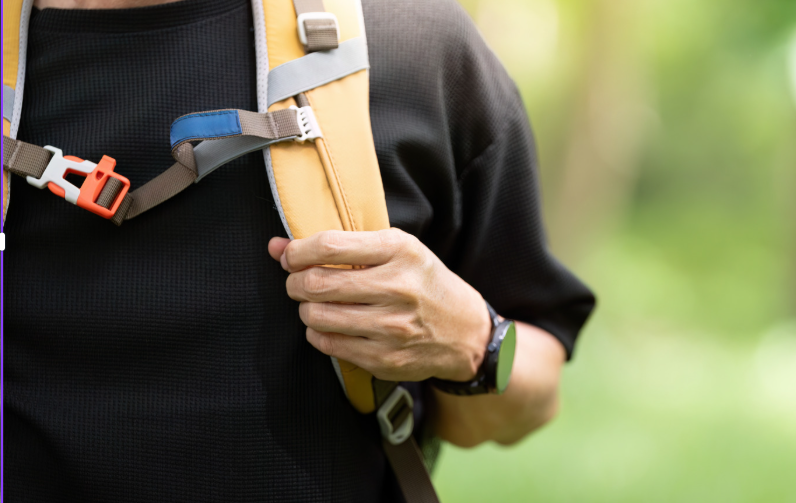
Tensile strength determines the maximum load a strap can bear before snapping. This is critical for safety. Machines pull the strap until failure to record the breaking point.
| Material Type | Typical Tensile Strength (lbs) |
|---|---|
| Cotton | 1,500 |
| Polypropylene | 3,500 |
| Polyester | 4,500 |
| Nylon | 5,000+ |
Seam strength is equally vital. Even the strongest strap is useless if the stitching attaching it to the bag fails. Inspectors pull on the strap and bag body in opposite directions to ensure the seams hold under stress.
Mechanical and On-Site Testing
Mechanical tests simulate repeated stress. A backpack is loaded with a set weight (e.g., 20kg) and lifted by its straps thousands of times. Inspectors monitor for fraying, stretching, or stitch failure.
| Test Aspect | Description |
|---|---|
| Purpose | Measure tensile strength under dynamic load. |
| Importance | Ensures materials survive harsh conditions and heavy loads. |
| Standards | ASTM D412, ASTM D638 (Tensile Properties). |
On-site testing involves practical checks like the "handle jerk test," where a loaded bag is lifted suddenly to test shock resistance. These tests ensure straps and handles won't fail during sudden movements.
Zipper Reciprocating Durability Checks
Fatigue and Endurance Testing
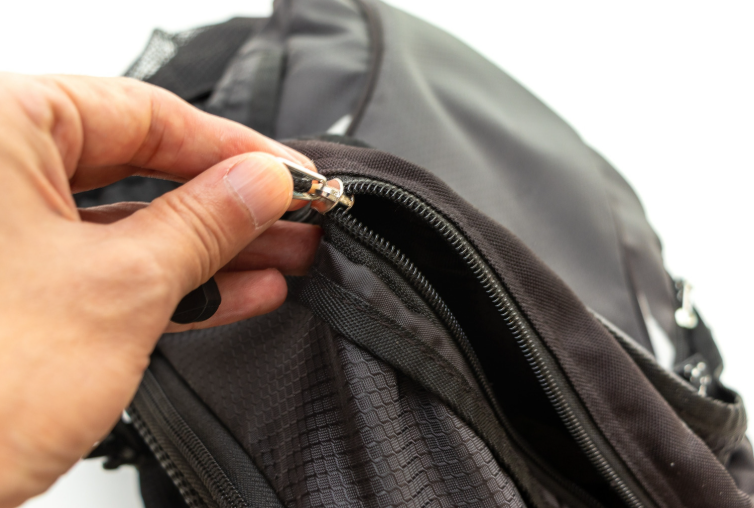
Zipper failure renders a backpack useless. QC teams use reciprocating machines to open and close zippers thousands of times. Tests often run for 10,000 to 30,000 cycles to simulate the product's entire lifespan.
| Test Parameter | Standard Requirement |
|---|---|
| Cycle Count | 10,000 - 30,000 cycles depending on product class. |
| Pull Force | Must meet ASTM D2061 minimums. |
| Corrosion | Must remain functional after salt-spray exposure. |
| Slider Retention | Slider must not detach under specified load. |
Functional and Visual Inspection
Inspectors manually check zippers for smoothness. They look for snagging, misalignment, and stitching defects around the zipper tape. Strength tests on the stops and pullers ensure components won't snap off.
- Visual check for stitching alignment and defects.
- Strength tests for top/bottom stops and slider locks.
- Manual zip/unzip tests to ensure smooth operation.
- Special tests for abrasion and washing resistance.
Tip: A zipper that operates smoothly without catching fabric is a hallmark of quality manufacturing.
Practical Impact of QC Results
Consumer Guidance
Quality control reports empower consumers. When choosing a backpack, buyers should look for reinforced zippers (like YKK), durable materials (high Denier nylon/polyester), and robust stitching. Certifications and pass/fail results on these key metrics indicate a trustworthy product.
Manufacturer Improvements
Manufacturers use QC data to refine designs. If strap tests fail, they might reinforce stitching or change webbing suppliers. If zippers fail early, they upgrade the slider quality. This continuous feedback loop drives product improvement and reduces return rates.
Robust QC testing builds trust in outdoor gear. By verifying strap strength and zipper durability against international standards, manufacturers ensure safety and performance. Consumers can confidently choose products that have passed these rigorous assessments.
| Test | Purpose | Standard |
|---|---|---|
| Load Testing | Strap/Seam Durability | e.g., 20kg static load |
| Abrasion Testing | Fabric Wear Resistance | 1000+ cycles |
| Zipper Fatigue | Functional Lifespan | ASTM D2061 |
FAQ
How do inspectors test backpack straps for strength?
Straps are pulled by machines until they break to record maximum force, or subjected to repeated lifting cycles with a loaded bag to simulate wear.
What does a zipper reciprocating durability test involve?
A machine mechanically opens and closes the zipper thousands of times to check for wear, failure, or jamming under continuous use.
Why use both Hardline and Softline testing?
Backpacks are complex products. Hardline testing ensures the frame and buckles are strong, while Softline testing ensures the fabric and stitching won't tear.
Which standards guide outdoor backpack QC?
Common standards include ISO (for materials), ASTM (for zippers and strength), and EN (for seam performance and safety).
What should buyers check before purchasing?
Look for branded zippers (YKK/SBS), reinforced stitching at stress points (bar tacking), and durable fabric specifications (e.g., 500D Cordura).
Related Articles
Grow your business with TradeAider Service
Click the button below to directly enter the TradeAider Service System. The simple steps from booking and payment to receiving reports are easy to operate.
