
- About Us

- Our Services
- Your Industry
- Resources
- News & Blog
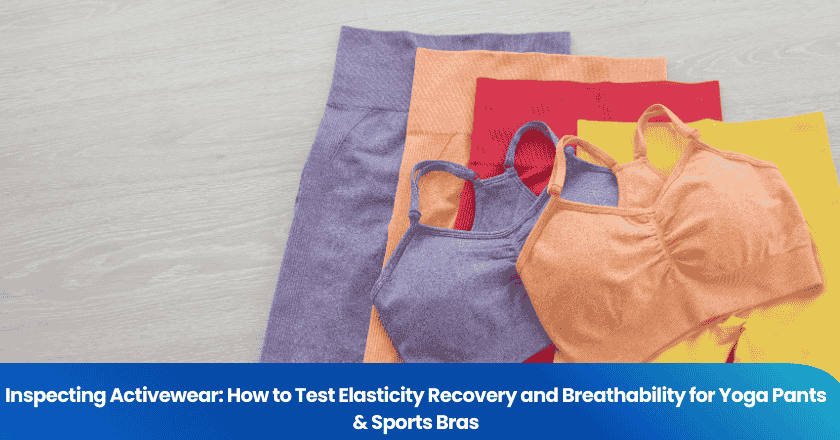
The high-performance activewear sector is governed by precise mechanical and physiological parameters. For products such as yoga pants and sports bras, technical efficacy is not merely a matter of aesthetic design but a result of material engineering and rigorous quality validation. Functional apparel must maintain its structural integrity under repetitive tensile stress while facilitating efficient thermoregulation through high water vapor permeability. To ensure these standards are met, manufacturers and importers rely on sophisticated laboratory protocols and on-site evaluations that analyze elastomeric stability and moisture dynamics. Professional quality control mechanisms are essential for mitigating the risks of sagging, transparency, and physiological discomfort in premium fitness gear.
Key Takeaways
- Elasticity recovery testing (ASTM D2594) determines a garment's ability to retain its original shape after dynamic movement.
- Breathability is quantified through Water Vapor Transmission Rate (WVTR), ensuring thermal comfort during high-intensity exercise.
- TradeAider utilizes the ANSI/ASQ Z1.4-2008 (AQL) standard to provide statistically sound sampling for activewear shipments.
- On-site tests, including the squat test for transparency and flatlock seam inspection, prevent functional failures in consumer use.
- Defect classification (Critical, Major, Minor) serves as the technical filter for batch acceptance or rejection during apparel quality control.
- Real-time reporting through digital service systems accelerates the rectification process and maintains supply chain transparency.
The Physics of Elasticity: Tensile Recovery and Material Science
The core of activewear performance lies in the use of elastomeric yarns, such as Spandex (Elastane) or Lycra, blended with synthetic fibers like Nylon or Polyester. The "Elasticity Recovery Rate" measures the percentage of a fabric's return to its original state after a specified elongation. In technical apparel, 4-way stretch fabrics are preferred because they allow for isotropic elongation, adapting to the multidirectional expansion of muscles during dynamic yoga poses or cardiovascular training.
Professional Lab Validation for Stretch Resilience
Laboratory technicians utilize a Universal Testing Machine (UTM) to perform the Tensile Rebound Test. This involves stretching a fabric sample to a fixed percentage of its length, holding it for a specified duration, and measuring the permanent set after release. For premium yoga pants, a recovery rate of 95% or higher is the industrial benchmark. High recovery prevents the "bagging" effect at the knees and waist, which is a common indicator of polymer fatigue in lower-quality textiles.
| Performance Metric | Technical Objective | Standard Protocol |
|---|---|---|
| Elastic Recovery Percentage | Prevent permanent fabric deformation | ASTM D2594 / ISO 20932 |
| Bursting Strength | Ensure seam and fabric durability | ASTM D3786 |
| Spandex Content Accuracy | Verify fabric blend ratios | AATCC 20A Analysis |
| Compression Modulus | Optimize muscle support and stabilization | Load-deflection curves |
On-Site Quality Evaluation and TradeAider's AQL Standards
To ensure that finished products match the engineering specifications, TradeAider assigns inspectors with extensive experience in apparel inspections to visit the factory and conduct on-site evaluations. This on-site assessment follows established international protocols and specific customer requirements, covering sampling methodology, defect classification, and physical product assessment.
The TradeAider Sampling Plan
At TradeAider, we use the globally trusted ANSI/ASQ Z1.4-2008 (AQL) Single Sampling Plan for all inspections. This standard ensures consistent, reliable quality checks aligned with ISO 2859-1. For a 500-piece order, a General Inspection Level II (G-II) might involve checking 50 units. Defects are strictly categorized to provide an objective pass/fail verdict:
- Critical Defects: Safety risks (e.g., broken needles found in seams) or extreme tolerance deviations. (Tolerance: 0).
- Major Defects: Functional failures that affect usability (e.g., holes, significant color shading, or failed elasticity). (e.g. 1.5).
- Minor Defects: Aesthetic issues that do not impair function (e.g., uncut threads or slight variations in label placement). (e.g. 4.0).
- Expert Insight: "Transparency" is a common major defect in yoga leggings. TradeAider inspectors perform a "Squat Test" during on-site evaluation to ensure the fabric remains opaque at 30% elongation, protecting the brand's reputation for quality.
Evaluating Breathability and Vapor Dynamics
Breathability in activewear is the fabric's ability to facilitate moisture vapor transport from the skin to the exterior environment. This process, often referred to as Water Vapor Transmission Rate (WVTR), prevents sweat accumulation, which can lead to rapid cooling (chilling) after exercise or skin irritation. High breathability is achieved through moisture-wicking finishes or hydrophobic/hydrophilic fiber combinations that "pull" sweat through the fabric matrix.
Water Vapor Permeability (WVP) Testing
Professional quality control testing uses gravimetric methods, such as the Upright Cup method, to measure how many grams of water vapor pass through a square meter of fabric over 24 hours. A rating above 10,000 g/m2/day is generally considered excellent for high-impact activities.
| Fiber Type | Moisture Management Mechanism | Breathability Index |
|---|---|---|
| Micro-Polyester | Capillary action via channeled fibers | High (Quick-dry) |
| Bamboo Rayon | Absorptive moisture uptake | Excellent (Natural) |
| Nylon 6,6 | Surface wicking with cool-touch feel | Moderate to High |
| Standard Cotton | Absorptive (slow evaporation) | Low (Heavy when wet) |
Key On-Site Tests and Data Measurement
A comprehensive standardized product inspection for activewear includes several physical and data-driven tests beyond visual checks. TradeAider inspectors perform the following items determined by the characteristics of each product:
- Data Measurement: Inspecting product size and weight measurements (GSM) to ensure the fabric matches the approved samples.
- Color Fastness (Rubbing Test): Rubbing safety labels and fabric surfaces to ensure dyes do not transfer during intense friction or perspiration.
- Seam Durability: Evaluating flatlock and overlock seams for "stitch density" and strength to prevent unraveling during dynamic movement.
- Packaging Integrity: Performing carton drop tests to ensure that the garments arrive at their destination without damaged individual packaging or moisture ingress.
- Functionality: Barcode scan tests and battery assembly tests (for smart activewear) to ensure all retail and tech features are operational.
Real-Time Reporting and Rectification Feedback
Data transparency is the cornerstone of TradeAider's service. Inspectors document findings with photos, videos, and measurements, leading to a conform, non-conform, or pending verdict. All results are uploaded in real time to the TradeAider Service System, generating an Online Real-time Report. Clients can access this report while the inspection is still in progress, allowing for immediate intervention.
If pending or non-conforming items are identified, the online real-time report enables the client to decide whether the products are acceptable, require on-site rectification by the supplier under the guidance of our inspector, or must be rejected.
Technical Maintenance for Activewear Longevity
While factory quality ensures initial performance, the operational life of functional garments depends on proper care. Elastomers are sensitive to high temperatures and chemical oxidants. To maintain elasticity recovery and breathability, the following technical guidelines are recommended:
- Thermal Exposure: Washing in cold water (below 30'C) is mandatory to prevent the degradation of polyurethane chains in Spandex.
- Surfactants: Avoid fabric softeners; these chemicals coat the fibers and clog the wicking channels, significantly reducing the fabric's breathability index.
- Drying Protocols: Air drying is superior to machine drying. Mechanical heat can cause "elasticity drift," where the fabric permanently loses its rebound capacity.
Ready to secure your product quality before shipment?
As your third-party inspection, testing & certification partner in China, TradeAider supports brands and sourcing teams across the entire production process, helping you identify quality risks early, ensure compliance, and strengthen your team’s capabilities before shipment.
Book an Inspection or Testing Service with TradeAider today, or for tailored solutions and expert guidance, contact us at services@tradeaider.com or submit the request form on the right. →
Frequently Asked Questions (FAQ)
What is the difference between 2-way and 4-way stretch?
2-way stretch fabric elongates only in one direction (usually crosswise). 4-way stretch fabric elongates both crosswise and lengthwise, providing the full mobility required for complex movements in yoga and athletics.
How does TradeAider classify a "Major" defect in yoga pants?
A major defect is any issue that prevents the product from being sold at its intended price point or compromises its function. Examples include a failed elasticity test, a visible hole in a seam, or inconsistent sizing that exceeds the +/- 1cm tolerance.
What is the typical GSM for high-quality yoga leggings?
Grams per square meter (GSM) typically ranges from 220 to 320. A GSM below 200 may lead to transparency issues (squat test failure), while a GSM above 350 may be too restrictive and less breathable for intense workouts.
Can I access the inspection report while the inspector is still at the factory?
Yes. Through the TradeAider Service System, clients receive real-time updates and an Online Real-time Report as the data is collected, enabling immediate feedback to the supplier.
Does "Quick-dry" mean a fabric is breathable?
Not necessarily. A fabric can be quick-dry (due to a chemical finish) but have a tight weave that restricts airflow. True performance activewear optimizes both breathability (air/vapor flow) and moisture-wicking (liquid movement).
Related Articles

Grow your business with TradeAider Service
Click the button below to directly enter the TradeAider Service System. The simple steps from booking and payment to receiving reports are easy to operate.