
- About Us

- Our Services
- Your Industry
- Resources
- News & Blog

Amazon sellers face increasing demands for quality and compliance. Using a Standardized QC SOP is essential to protect businesses from costly returns and negative reviews. A strong SOP provides clear steps for every stage, helping teams avoid mistakes and deliver consistent results. Many private label sellers rely on these systems to keep up with Amazon's strict rules and customer expectations.
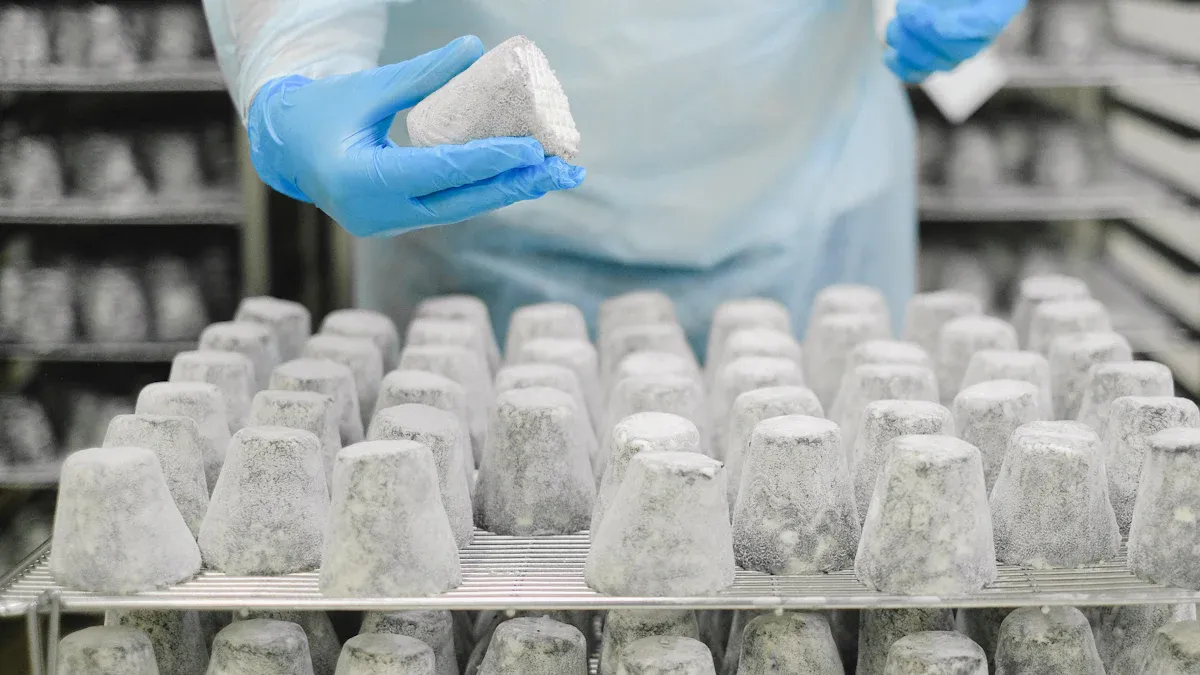
Implementing rigorous quality control processes helps maintain high product standards on Amazon. Sellers who use standardized procedures see fewer complaints and higher customer satisfaction.
| Benefit | Description |
|---|---|
| Enhanced Efficiency | Clear instructions eliminate confusion, allowing employees to complete tasks faster and with precision. |
| Consistent Quality | Ensures that product displays, pricing, and customer service maintain a set standard. |
| Regulatory Compliance | Provides a structured approach to meeting various laws and safety standards. |
| Reduced Operational Risks | Well-documented procedures decrease the chances of mismanagement or costly mistakes. |
Key Takeaways
- A Standardized QC SOP helps Amazon sellers maintain product quality and compliance, reducing returns and negative reviews.
- Implementing clear procedures enhances efficiency, allowing teams to complete tasks faster and with fewer errors.
- Regular training on SOPs ensures employees understand processes, leading to better compliance and quicker onboarding.
- Using data analytics to refine SOPs keeps businesses competitive and compliant with Amazon's changing policies.
- Establishing a structured feedback system helps identify and resolve issues, promoting continuous improvement in quality control.
What Is a Standardized QC SOP?

SOPs in Amazon Operations
A Standardized QC SOP stands as a detailed guide for Amazon sellers. It outlines every step needed to maintain product quality and meet marketplace standards. In Amazon operations, SOPs help teams follow the same process each time. This approach reduces mistakes and keeps results consistent. Sellers use standard operating procedures to train new staff and scale their business without losing control over quality.
- SOPs provide structured frameworks that ensure uniform task execution, enhancing efficiency and reducing errors.
- They facilitate training and preserve knowledge, which supports scalability and contributes to operational consistency.
- SOPs establish clear guidelines for tasks, ensuring that every operation is executed seamlessly.
Quality Control and Compliance
Quality control forms the backbone of any Amazon business. A strong SOP ensures that every product meets the required quality before it reaches the customer. Amazon demands strict compliance from its sellers.
| Compliance Requirement | Description |
|---|---|
| Product Compliance Documentation | Sellers must submit and have approved documentation before listing new products. |
| Required Documents | Includes Children's Product Certificates (CPC), GCC, test reports, and MSDS. |
| Non-compliance Risks | Risks include product delisting, account suspension, and legal liability. |
Building Your Standardized QC SOP

A Standardized QC SOP for an Amazon business provides a clear roadmap for maintaining quality and compliance. This section explains how to structure SOPs around five key inspection phases.
Foundational Standards and Compliance
Every effective SOP begins with strong foundational standards. Amazon Operations SOPs must define what quality means for each product category. Teams set clear benchmarks using international standards like ISO 9001 and AQL. ISO 9001 guides companies to build quality management systems that meet customer and regulatory needs.
Supplier Verification
Supplier reliability forms the backbone of any Standardized QC SOP. Teams check the supplier's business qualifications, production capacity, and quality management systems. Reviewing transaction history and customer feedback helps confirm the supplier's track record.
- Develop clear quality standards based on Amazon's requirements.
- Choose an inspection partner with Amazon FBA experience.
- Train inspectors to follow quality standards.
- Use advanced technology for inspections.
- Conduct regular audits to optimize the process.
Mid-Production Quality Control
Mid-production inspections are essential for catching problems early. SOPs require teams to set clear quality standards and communicate them to suppliers. Inspectors use AQL sampling to select a representative sample size.
Final FBA Compliance
The final inspection phase focuses on Amazon FBA compliance. SOPs require a thorough check of packaging, labeling, and product quality. Each product must have a unique FNSKU label and a scannable barcode.
| Compliance Check | Description |
|---|---|
| FNSKU Labeling | Each product needs a unique FNSKU label for Amazon FBA identification. |
| Scannable Barcode | Packages must have an exterior barcode for tracking. |
| Packaging Requirements | Items must follow Amazon's packaging rules for their category. |
| Expiration Date | Products with expiration dates must show the date in MM-DD-YYYY format. |
Logistics and Security
The last phase covers logistics and security. SOPs require a quality check before packing to confirm products are undamaged and correct. Teams use proper packaging materials, such as bubble wrap or foam inserts, for fragile items. Contracts should specify storage and transport conditions, including temperature and special handling needs.
Maintaining and Improving Amazon Operations SOPs
Training and Team Implementation
Ongoing training plays a vital role in the success of Amazon Operations SOPs. Teams that receive regular instruction understand standardized procedures and follow them with greater accuracy. Training reduces errors and helps new employees adapt quickly to the Amazon business environment.
Feedback and CAPA Protocols
SOPs require structured feedback and corrective action plans to address issues. Teams use a quality management system to identify and resolve problems. Root cause analysis tools, such as the 5 Whys, help uncover underlying issues.
| Component | Description |
|---|---|
| Root Cause Analysis | Utilizes methodologies like 5 Whys to investigate underlying issues. |
| Corrective Actions | Measures implemented based on findings to address identified issues. |
| Preventive Actions | Strategies developed to avoid the occurrence of potential issues in the future. |
Data-Driven Quality Adjustments
Amazon sellers treat SOPs as living documents. Teams use data analytics to review and refine processes. They track data quality dimensions like accuracy, completeness, and timeliness. Metrics and thresholds help measure performance.
Tip: A continuous improvement mindset helps Amazon sellers stay ahead of changing policies and customer expectations.
FAQ
What does AQL mean in Amazon quality control?
AQL stands for Acceptable Quality Limit. It sets the maximum number of defects allowed in a product batch. Amazon sellers use AQL to decide if a shipment meets their quality standards before sending products to customers.
Why should Amazon sellers use a standardized QC SOP?
A standardized QC SOP helps sellers avoid costly mistakes. It gives clear steps for inspections and compliance. This process reduces returns, prevents negative reviews, and protects the seller's reputation on Amazon.
How often should teams update their QC SOP?
Teams should review and update their QC SOP at least once a year. They must also update it when Amazon changes its requirements or when new products are added to the catalog.
What happens if a shipment fails the final inspection?
If a shipment fails, the seller must fix the problems before shipping. The team may repair or replace defective items. Inspectors check the products again to make sure they meet all standards.
Who is responsible for QC in an Amazon business?
The seller holds responsibility for quality control. They may hire third-party inspectors or train their own team. The seller must ensure every product meets Amazon's requirements before shipment.
Related Articles
 in China Preventing Empty Boxes and Damage.png)
 vs. During Production Inspection (DPI) Which Do Sellers Need.png)
Grow your business with TradeAider Service
Click the button below to directly enter the TradeAider Service System. The simple steps from booking and payment to receiving reports are easy to operate.
