
- About Us

- Our Services
- Your Industry
- Resources
- News & Blog
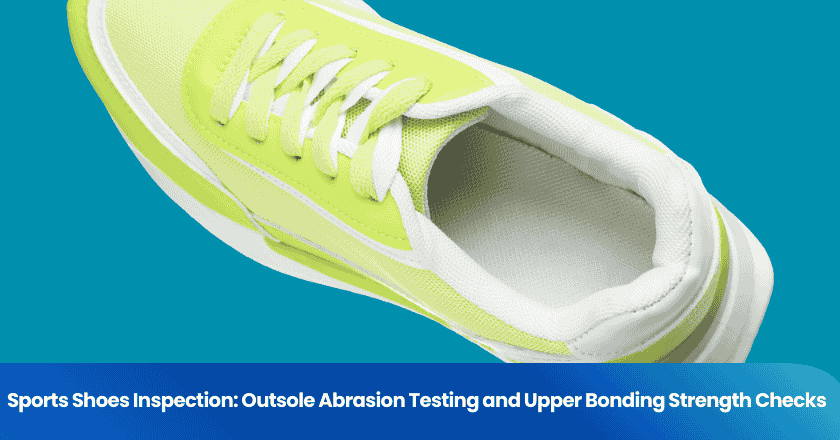
In the technical domain of Softline Products, the reliability of athletic footwear is governed by its resistance to dynamic mechanical loads and environmental degradation. The manufacturing of high-performance sports shoes requires a specialized multi-stage verification framework that prioritizes outsole volumetric integrity and the chemical stability of the bonding interface. A failure in either metric—such as premature sole wear or upper delamination—not only compromises the athlete's performance but also poses significant safety risks. Adhering to international benchmarks like ISO 20344 and ASTM F2413 is essential for manufacturers seeking global market entry and brand longevity. This guide provides an in-depth technical exploration into the metrology of abrasion testing and the kinetics of upper-to-sole bonding strength.
Key Takeaways
- Outsole abrasion resistance is quantified using the DIN method (ISO 4649), measuring relative volume loss under standardized friction.
- Upper bonding strength (ISO 20344) must meet specific peel force thresholds (N/mm) to prevent delamination during high-impact movement.
- Bicomponent PU adhesives and thermal activation cycles are the technical baselines for industrial assembly integrity.
- Material metrology includes 'Flex Resistance' testing (Bally Flex) to ensure the upper does not crack after 100,000 bending cycles.
- Professional quality checks must identify latent defects such as adhesive crystallization or chemical blooming.
- Compliance with REACH and Prop 65 ensures the absence of restricted phthalates and hexavalent chromium in the supply chain.
The Metrology of Outsole Abrasion: ISO 4649 Analysis
The outsole is the primary interface between the wearer and the substrate, subjected to constant shear stress and compressive force. Abrasion resistance testing focuses on the material's ability to resist the removal of mass by friction. High-quality industrial footwear utilize Butadiene Rubber (BR) or Styrene-Butadiene Rubber (SBR) blends formulated for specific Shore Hardness levels.
The DIN Abrasion Protocol
The most widely accepted industrial standard is the DIN 53516 (now ISO 4649). A cylindrical test piece is moved across a rotating drum covered with a standardized abrasive paper (typically P60 grit). The objective is to measure the 'Relative Volume Loss' (mm3). A lower value indicates a higher resistance to wear. For professional-grade basketball or tennis shoes, the volumetric loss must typically be less than 150 mm3, whereas budget-tier sneakers often exceed 250 mm3.
| Performance Category | Test Standard | Technical Threshold | Usage Scenario |
|---|---|---|---|
| High-End Performance | ISO 4649 (Method A) | < 120 mm3 | Pro Marathon, Tennis, Crossfit |
| Standard Athletic | ISO 4649 (Method B) | 120 - 180 mm3 | Daily Running, Gym use |
| Lifestyle / Casual | NBS Standard | > 200 Index | General leisure walking |
| Heavy-Duty Industrial | EN ISO 20345 | < 150 mm3 | Construction, Safety gear |
The Chemistry of Bonding Strength: Preventing Delamination
Upper-to-sole bonding is a chemical engineering challenge. Modern footwear utilizes high-density EVA (Ethylene Vinyl Acetate) or TPU (Thermoplastic Polyurethane) midsoles that are inherently low-energy surfaces. To achieve a permanent bond, these surfaces must undergo 'Priming' and 'Buffing' to create mechanical and chemical anchors for the adhesive matrix.
Kinetics of PU Adhesives and Thermal Activation
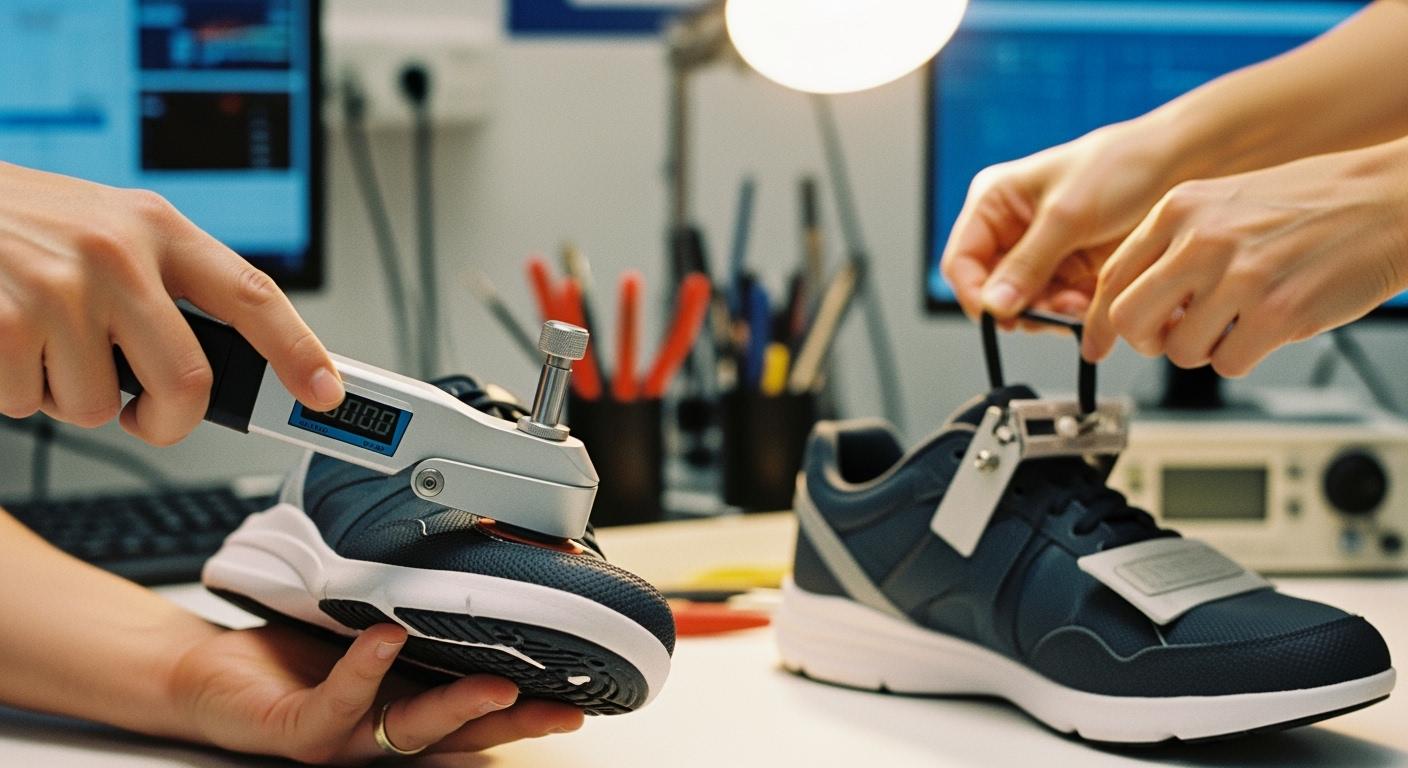
Most professional assembly lines utilize Polyurethane (PU) adhesives. The technical efficacy of the bond is dependent on the 'Open Time' and the 'Heat Activation' temperature (typically 55'C to 65'C). If the temperature is insufficient, the adhesive does not reach its flow state, resulting in a 'Cold Bond' that will fail under stress. During quality assurance checks, inspectors measure the peel strength using the SATRA TM 404 protocol.
Technical Insight: For a bond to pass professional inspection, the failure mode must ideally be 'Material Failure' (where the rubber or leather tears before the glue line gives way) rather than 'Adhesion Failure.' A peel strength of 3.0 N/mm to 4.5 N/mm is the standard baseline for sports apparel.
| Bonding Variable | Technical Objective | Impact of Non-Compliance |
|---|---|---|
| Primer Concentration | Increase surface energy of polymers | Rapid peeling after 100 cycles |
| Pressing Pressure | Eliminate micro-air pockets in joint | Visual adhesive lines and gap formation |
| Curing Duration | Allow cross-linking of PU molecules | Structural instability in humid heat |
| Roughing Depth | Increase mechanical interlocking | Weak bond on smooth leather surfaces |
Structural Integrity and Flex Resistance Protocols
Even with a strong bond, the shoe must survive millions of flex cycles without the upper cracking or the sole developing 'Flex Cracking' fissures. This is particularly critical in the 'Forefoot Break Area' where the foot naturally hinges during gait.
ROSS Flex and BALLY Flex Testing
Laboratory validation utilizes machines that fold the shoe or material sample at high speeds. The Bally Flex test (ISO 5402) is used for leather uppers, requiring the material to withstand 100,000 cycles without visible surface cracking. For the outsole, the ROSS Flex test (ASTM D1052) involves creating a 2mm 'starter cut' in the sole and bending it 90 degrees for 100,000 cycles. To pass, the growth of the cut must be minimal, verifying the material's 'Cut-Growth Resistance.'
Effective shoe quality control integrates these mechanical tests into the pre-production phase to ensure that the chosen material batch matches the certified prototype data.
Global Safety Standards and Regulatory Compliance
Navigating the global regulatory landscape is essential for aftermarket and professional footwear. In the United States, ASTM F2413 governs safety features like toe cap impact and electrical hazard protection. In Europe, the EN ISO 20345 standard provides the framework for industrial-use footwear. For companies procuring high-performance shoes, achieving the CE or ASTM mark is the technical confirmation of safety.
Chemical Restricted Substance Lists (RSL)
Beyond mechanical strength, chemical safety is non-negotiable. Quality control must verify the absence of:
- Hexavalent Chromium (Cr VI): A carcinogen found in poorly tanned leathers.
- Phthalates: Plasticizers used in synthetic uppers and outsoles that are restricted in children's footwear.
- Dimethylfumarate (DMFu): An anti-mold agent often used in shipping containers that can cause severe skin irritation.
A comprehensive factory audit must evaluate the vendor's chemical inventory management to ensure compliance with the ZDHC (Zero Discharge of Hazardous Chemicals) guidelines.
Practical Quality Control for Bulk Procurement
Consistency is achieved through 'In-Line' and 'Pre-Shipment' verification. During standardized footwear quality inspections, several on-site protocols should be followed to identify common manufacturing defects:
- The 'Pull-Test': Utilizing a force gauge to verify that accessories like eyelets and logos can withstand a pull force of 90N.
- Symmetry Verification: Using laser-cut templates to ensure the left and right shoes are mirror images in height and curvature.
- Metal Detection: Especially for children's shoes, every pair must pass a metal detector to ensure no broken needles are trapped in the lining.
- X-Ray Inspection: For safety shoes, X-ray analysis is used to verify the correct positioning of the steel or composite toe caps.
By prioritizing components that have passed rigorous mechanical testing, brands can ensure they deliver products that safeguard the athlete's anatomical integrity and enhance their performance lifecycle.
Ready to secure your product quality before shipment?
As your third-party inspection, testing & certification partner in China, TradeAider supports brands and sourcing teams across the entire production process, helping you identify quality risks early, ensure compliance, and strengthen your team’s capabilities before shipment.
Book an Inspection or Testing Service with TradeAider today, or for tailored solutions and expert guidance, contact us at services@tradeaider.com or submit the request form on the right. →

Frequently Asked Questions (FAQ)
What is the difference between DIN and NBS abrasion tests?
The DIN test (ISO 4649) is the modern industrial standard, measuring actual volume loss in mm3. The NBS test is an older American method that measures the time taken to wear through a specific thickness of rubber. DIN is generally considered more accurate for high-performance sports polymers.
Why do my shoes smell like strong chemicals?
This is often a sign of 'Volatile Organic Compounds' (VOCs) originating from solvent-based adhesives that have not been properly 'gassed out' or cured. High-quality quality assurance protocols mandate a minimum 'drying tunnel' duration to eliminate these odors before packaging.
Can I test bonding strength at home?
While a professional peel test requires a machine, a simple 'Thumb Pressure' test can identify poor bonding. If the sole edges can be pulled back slightly with moderate thumb force, the bond is likely deficient and will delaminate within a few weeks of use.
What is 'Adhesive Crystallization'?
This is a technical failure where the adhesive turns into a hard, brittle state due to improper chemical mixing or expired shelf-life. This results in a bond that snaps rather than peels, leading to sudden sole separation during cold weather.
How does hydrolysis affect sports shoes?
Hydrolysis is the chemical breakdown of PU (Polyurethane) midsoles caused by moisture. In humid environments, poorly stabilized PU can literally crumble into powder. High-end footwear uses 'Polyether-based' PU or adds stabilizers to prevent this 'Quality Fade' during long-term storage.

Related Articles
Grow your business with TradeAider Service
Click the button below to directly enter the TradeAider Service System. The simple steps from booking and payment to receiving reports are easy to operate.