
- About Us

- Our Services
- Your Industry
- Resources
- News & Blog
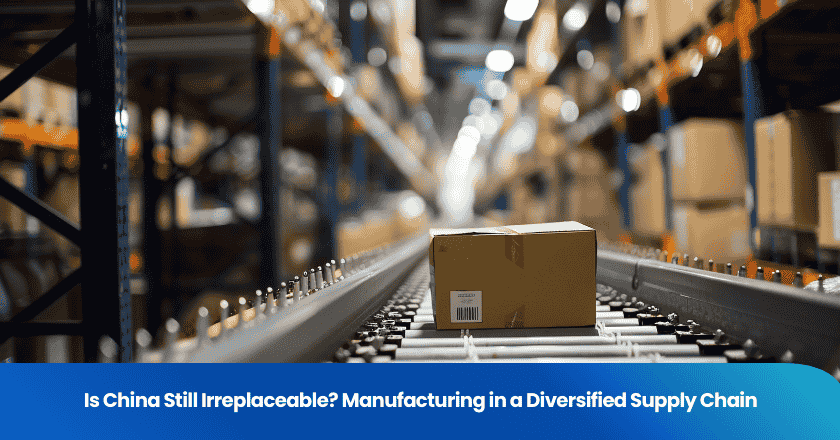
That China remains irreplaceable is a proven fact in today's global manufacturing landscape. The country claims nearly 30% of global manufacturing output, a figure unmatched by any other nation.
Looking back, China accounted for 29% of global manufacturing output in 2023. That share climbed to 30% in 2024, and initial estimates indicate it held steady above 30% through 2025, marking China's 16th consecutive year of global manufacturing dominance.
| Country | Manufacturing Output | Workforce Relevance |
|---|---|---|
| China | Global Leader (Top Nation) | Highest Industrial Workforce |
| Poland | High Regional Percentage | Significant Manufacturing Labor |
China's unmatched scale, integrated quality assurance systems, and seamless connection to global supply chains make it central for business decision-makers. While diversification presents new opportunities, few alternatives can match this level of efficiency and oversight.
Key Takeaways
- China accounts for nearly 30% of global manufacturing output, securing its status as a key industry player.
- The "China Plus One" strategy allows companies to diversify supply chains while retaining China's efficiency.
- China's advanced quality control systems ensure high standards, significantly reducing business risks.
- E-commerce brands rely on Chinese suppliers for rapid production and reliable delivery.
- While diversification is beneficial, replacing China's scale and infrastructure remains a major challenge.
Why China Remains Irreplaceable: Core Strengths
Scale and Industrial Coverage
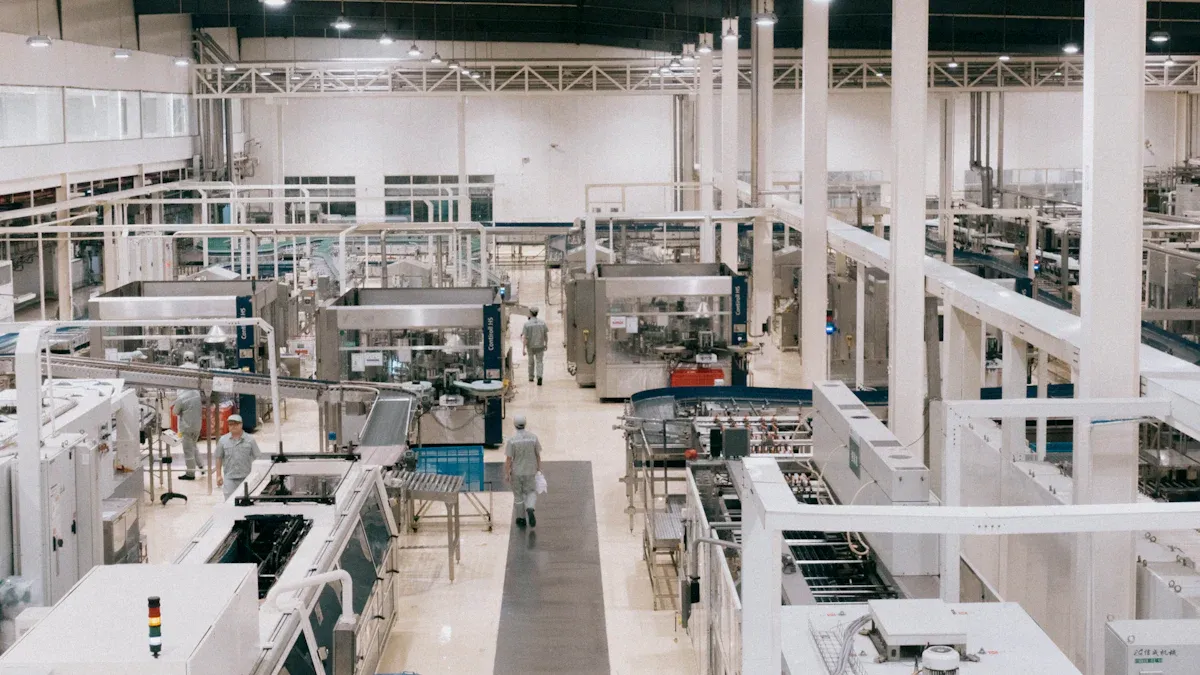
The sheer scale of China's ecosystem makes it unique. Production covers almost every product category, from complex electronics to basic textiles. Over 2,000 industry clusters operate across the nation. These clusters enable companies to share resources, lower costs, and accelerate production. They also encourage innovation and attract skilled workers from local universities.
China's advanced infrastructure supports this massive network. Ports, highways, and factories connect seamlessly, ensuring fast and reliable logistics. The skilled workforce handles complex manufacturing tasks efficiently, often utilizing robotics and AI to improve quality. This combination of scale, expertise, and technology solidifies China's position in global supply chains.
China offers:
- A comprehensive ecosystem for manufacturing.
- Efficient supply chain integration.
- Access to a massive pool of skilled workers.
- Advanced infrastructure for logistics and production.
Advanced Quality Control in China Sourcing
Quality stands at the center of China's manufacturing success. Companies rely on strict quality control systems to meet international standards. Specialized networks of inspectors operate throughout the country, checking products at every stage—from raw materials to final packaging.
Digital monitoring tools allow global clients to track inspections in real time, viewing results and resolving issues quickly from thousands of miles away. This robust infrastructure minimizes risks and prevents costly mistakes, proving that for high-stakes production, China is often irreplaceable.
Common quality certifications in China include:
- CE Certificate of Compliance
- RoHS Certification
- ISO 9001
- China's CCC Certificate
- HACCP Certificate
E-commerce and Global Integration
China's dominance extends heavily into the world of e-commerce. The country leads in cross-border e-commerce exports, with trade volumes reaching trillions of RMB annually. In 2024, exports grew by nearly 17%, demonstrating strong global demand.
Major platforms like Amazon and Shopify depend on Chinese suppliers for a vast array of goods. Factories here are optimized to meet strict delivery and quality requirements, integrated with digital systems that allow sellers to monitor orders efficiently. While countries like India and Vietnam are growing, "China Plus One" strategies typically retain China as the primary source for high-volume products.
Note: China's role in e-commerce supports millions of global businesses, from small online shops to large retailers.
Compliance and Regulatory Expertise
Manufacturers in China possess deep experience in meeting complex international regulations. They understand the importance of compliance for global markets and frequently hold certifications required by the US, EU, and other regions. These include safety, environmental, and social responsibility standards.
Quality control teams ensure products meet all necessary rules before shipping, reducing the risk of border rejections. This regulatory knowledge makes China a trusted partner for brands requiring reliable, compliant products.
- Key compliance certifications:
Diversification Trends and China's Role

Geopolitical and Economic Pressures
Global supply chains face constant pressure from geopolitical and economic events. Recent history—from the US-China trade tensions to conflicts affecting transport routes—has highlighted the fragility of global networks. Tariffs, sanctions, and route disruptions push companies to rethink strategies and explore risk reduction through alternative manufacturing locations.
The "China Plus One" Strategy
The "China Plus One" strategy involves keeping core production in China while establishing satellite factories in other countries to spread risk. Initially driven by cost reduction, this strategy accelerated after supply chain disruptions in recent years. Countries like India, Vietnam, Malaysia, and Thailand have emerged as popular destinations for this diversification.
| Country | Reason for Selection |
|---|---|
| Vietnam | Strategic advantages and geographic proximity |
| Malaysia | Favorable business environment |
| Thailand | Skilled workforce (Auto/Electronics) |
Limits of Diversification
Diversification brings benefits, but complete decoupling is rarely feasible. Moving production is complex and resource-intensive:
- Companies often still rely on Chinese suppliers for raw materials and components (upstream dependency).
- Building new supply chains can take five to ten years to reach maturity.
- China spent decades building its infrastructure; alternative hubs often cannot immediately match this scale.
Consequently, many brands continue to rely on China for essential products even while exploring new options.
Challenges in Replacing China Sourcing
Gaps in Alternative Manufacturing Hubs
While hubs like Vietnam, India, and Mexico offer competitive labor costs, they often struggle to match China's integrated expertise. The following comparison highlights these gaps:
| Gap Type | China | Emerging Hubs (Vietnam, India, Mexico) |
|---|---|---|
| Labor Costs | Higher due to wage growth | Generally lower (approx. 50% lower in Vietnam) |
| Operational Efficiency | High (Mature Ecosystem) | Variable; developing infrastructure |
| Supply Chain Depth | Full vertical integration | Often requires imported components |
| Logistics Capacity | Massive throughput | Limited air/ocean freight capacity in some regions |
Logistics present a significant hurdle. Southeast Asia faces limitations in freight capacity compared to China, often increasing lead times. While infrastructure investments are ongoing, reaching China's level of efficiency will take time.
Supply Chain Integration Complexity
Transitioning away from China introduces complex challenges. Moving manufacturing requires transferring proprietary technical specifications, molds, and equipment, which can be legally and logistically difficult. Fragmentation leads to potential quality control issues and downtime.
Sector-Specific Dependencies
Certain industries remain heavily dependent on China due to concentrated expertise. For instance, Chinese companies dominate the battery market and advanced electronics sectors. By 2022, dependencies in minerals, fuels, and electronics remained high for Western markets. Approximately 70% of trade dependencies in electronics are linked to China, highlighting the strategic difficulty of replacing this sourcing hub completely.
Future of China Sourcing: Business Strategies
Balancing Risk, Cost, and Resilience
Companies planning for the future of sourcing must balance cost with resilience. Over 60% of companies are diversifying to avoid single-country reliance. Strategies include nearshoring (moving closer to markets) and comparing total landed costs. While rising wages in China affect pricing, the country's efficiency often offsets the lower labor costs found elsewhere.
Building Flexible Supply Chains
Flexibility is key. Best practices involve:
- Dual-Market Strategy: Producing high-precision/complex goods in China while moving simpler items to lower-cost regions.
- Technology Integration: Using AI-driven forecasting and IoT tracking to predict demand and monitor shipments.
- Partnership Approach: Treating suppliers as long-term partners to build trust and priority during shortages.
| Strategy | Description |
|---|---|
| Dual-Market Strategy | Production in China for complex goods; other countries for basic products. |
| Operational Flexibility | Ability to shift sourcing based on real-time market needs. |
| Cost Stabilization | Mitigates tariff impacts and maintains steady margins. |
Strategic Partnerships and Local Investments
Strong partnerships are vital. Investing in local distribution hubs and maintaining rigorous due diligence helps mitigate risks. Using third-party audits and legal counsel ensures contracts are enforceable and quality is maintained.
China remains central to global manufacturing. Businesses exploring diversification must weigh opportunities against challenges. The table below highlights key alternatives and their respective strengths:
| Country | Segment/Tech Level | Key Advantages |
|---|---|---|
| Japan / South Korea | High-tech | Advanced R&D and investment interest |
| Malaysia | Medium-tech | Strong semiconductor ecosystem |
| Thailand | Medium-tech | Established automobile manufacturing |
| India | Labor-intensive | Huge workforce, lower tariffs, growing investment |
| Vietnam | Labor-intensive | Trade liberalization and improving infrastructure |
| Indonesia / Australia | Commodity | Rich reserves of critical minerals (Nickel/Lithium) |
- Experts predict that China will remain vital for efficient and resilient supply chains.
- Companies should build flexibility and consider regional strengths.
- A balanced approach helps manage risk while capturing new opportunities.
FAQ
What makes China's manufacturing ecosystem unique?
China's ecosystem is unique due to its massive scale, covering almost every product category, supported by advanced infrastructure, skilled labor, and rigorous quality control systems.
Can companies fully replace China with other countries?
For most industries, fully replacing China is currently unfeasible. Alternative hubs lack the same level of integrated scale, expertise, and supply chain depth. Diversification reduces risk, but China remains essential.
How do businesses ensure product quality when sourcing from China?
Businesses use specialized quality control teams, third-party inspections, and digital monitoring tools to track production in real-time and resolve issues before shipment.
Why do e-commerce brands rely on Chinese suppliers?
E-commerce brands prioritize speed and reliability. China's factories are optimized for fast production cycles, competitive pricing, and seamless integration with platforms like Amazon.
What is the "China Plus One" strategy?
The "China Plus One" strategy involves maintaining primary production in China while adding a secondary manufacturing base in another country (like Vietnam or India) to mitigate risks.
Related Articles
Grow your business with TradeAider Service
Click the button below to directly enter the TradeAider Service System. The simple steps from booking and payment to receiving reports are easy to operate.
