
- About Us

- Our Services
- Your Industry
- Resources
- News & Blog
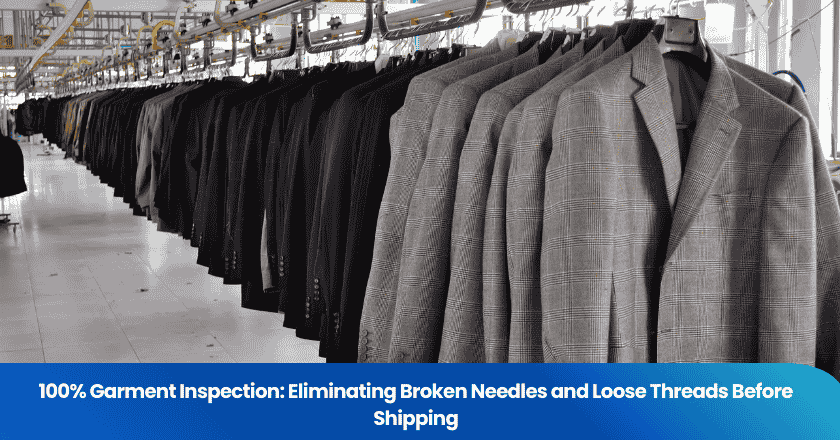
In the global apparel manufacturing sector, the transition from statistical sampling to 100% full-lot verification represents the highest echelon of quality assurance. For Softline Products, particularly those destined for high-regulation markets like the US and EU, the structural integrity and biological safety of a garment are non-negotiable. A single broken needle fragment or a high-tension loose thread in infant wear can lead to catastrophic consumer injury and multi-million dollar liability. Technical validation must therefore encompass both metrological screening for workmanship and advanced metal detection protocols. By implementing a zero-tolerance approach to critical defects, manufacturers ensure that every unit leaving the facility meets the stringent requirements of international compliance frameworks.

Key Takeaways
- 100% inspection is the definitive screening method for identifying critical safety hazards like metal fragments and sharp points.
- Zero-tolerance policies for broken needles are mandatory for compliance with GPSR and CPSC regulations.
- Advanced metal detection utilizes a 9-point sensitivity calibration to ensure consistent magnetic field coverage.
- Workmanship audits focus on 'Stitch-per-Inch' (SPI) consistency and thread tension to prevent latent seam failures.
- Integrating quality control checks at the end-line phase significantly reduces the 'Quality Fade' often seen in mass production.
- Comprehensive documentation and traceability are essential for safeguarding brand reputation during product recalls.
The Technical Necessity of 100% Inspection
While statistical sampling (AQL) is sufficient for minor visual defects, it is mathematically inadequate for critical safety risks. In the domain of apparel testing and quality control, a critical defect—such as a needle tip trapped in a seam—has an AQL of 0. Because a single occurrence can fail an entire lot, high-risk categories like children's apparel or technical activewear require a 100% piece-by-piece screen. This metrological approach ensures that every garment is functionally sound and safe for its intended end-use.
Industrial Workflow of Full-Lot Verification
The technical workflow of a 100% inspection is divided into three distinct zones: Visual Workmanship, Metrological Accuracy, and Safety Screening. Inspectors utilize high-intensity D65 standard lighting to detect color shade variations and thread anomalies that are often invisible under standard factory illumination.
| Inspection Zone | Technical Objective | Critical Parameters |
|---|---|---|
| Visual Workmanship | Identify surface and sewing defects | SPI, seam alignment, shade bands |
| Metrological Check | Verify dimensional tolerance | Points of Measurement (POM), symmetry |
| Safety Screening | Eliminate physical hazards | Metal detection, pull tests (90N/10s) |
| Final Finishing | Ensure presentation quality | Ironing marks, barcode integrity, folding |
Mechanical and Physical Hazards in Apparel
Safety defects are categorized by their potential to cause bodily harm. The most severe hazard is 'Metal Contamination,' usually originating from broken sewing needles, staples, or pins. If a needle breaks during high-speed sewing (often exceeding 4,000 stitches per minute), centrifugal force can propel fragments deep into the fabric layers, making them impossible to find through visual means alone.
Advanced Metal Detection and Needle Policies
To mitigate this, professional facilities implement a 'Strict Needle Policy.' This involves a mandatory stoppage of production when a needle breaks, requiring all fragments to be accounted for and mounted in a 'Broken Needle Log.' Subsequently, garments pass through a conveyorized metal detector. The technical standard for these machines is the detection of a 1.0mm ferrous sphere within the 'tunnel' of the detector. Calibration must follow a 9-point sensitivity check every hour to ensure no magnetic dead-zones exist.
Technical Standard: For children's wear, the detection threshold is even stricter, often requiring sensitivity to a 0.8mm ferrous sphere to prevent even the smallest micro-fragments from reaching the consumer.
Workmanship Audits: From Loose Threads to Seam Strength
Loose threads are often dismissed as cosmetic, but from an engineering perspective, they are indicators of poor thread tension or incorrect bobbin timing. If the starting or ending of a seam is not properly 'back-stitched' and trimmed, the seam can unravel under the dynamic loads of daily wear. This is specifically governed by ASTM D1683, which measures the strength of the seam against the fabric itself.
Physics of Sewing Tension and Seam Integrity
Excessive thread tension causes 'Puckering,' which distorts the garment silhouette, while loose tension leads to 'Thread Looping' or 'Grinning,' where the seam opens up when pulled. During a quality inspection checklist verification, inspectors perform a 'Stress Pull' on every major seam to verify that the sewing thread has maintained its elongation properties during the high-heat friction of the needle.
| Defect Category | Technical Cause | Inspection Action |
|---|---|---|
| Skipped Stitches | Needle-to-hook timing error | Reject unit for re-sewing |
| Loose Threads (>5mm) | Incorrect trimming or poor tension | Manual on-site rectification |
| Seam Grinning | Low needle thread tension | Adjust machine and rework lot |
| Raw Edges | Improper overlock alignment | Critical rejection if structural |
Specialized Safety Standards for Children's Apparel
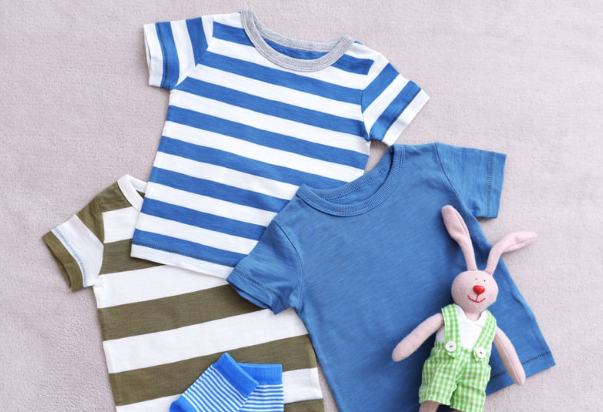
Compliance for children's Softline products is governed by the most stringent laws in the apparel industry, such as the Consumer Product Safety Improvement Act (CPSIA). Beyond metal detection, 100% inspection must include verification of attachments like buttons, snaps, and bows.
Technical inspectors utilize a 'Tension Gauge' to perform pull tests. According to international standards, any small part attached to a child's garment must withstand a pull force of 90 Newtons for a duration of 10 seconds without detachment. This prevents 'Choking Hazards'—a primary focus of apparel industry quality control. Furthermore, drawstrings in neck and hood areas are checked for length and 'bar-tacking' to prevent entanglement and strangulation risks.
Traceability and Compliance Documentation
Accuracy in product quality inspection is only as good as its documentation. In 100% inspection, a 'Sticker-Attaching' system is used to identify units that have cleared the safety gates. These stickers often contain batch codes that link back to the specific line, machine, and operator responsible for the garment.
Key records for regulatory compliance include:
- Metal Detection Calibration Logs: Proving the sensitivity of the detector throughout the production shift.
- Needle Replacement Records: Documenting every instance of breakage and fragment recovery.
- AQL-based Final Audit Reports: A statistical summary of the 100% screen to identify systemic production trends.
- Certificates of Conformance (CoC): Legal declarations that the shipment meets all regional safety standards.
Effective quality assurance compliance requires that these records be maintained for a minimum of 5-10 years, depending on the market, to provide a defense in the event of consumer litigation.
Continuous Improvement through Staff Training
Quality is not just a process; it is a culture. Developing a high-performance inspection team requires ongoing quality control training. Inspectors must be trained in 'Defect Visualization,' where they are exposed to a gallery of reference samples to ensure that 'Minor' and 'Major' classifications are consistent across the entire team. Feedback loops between the inspection table and the sewing floor allow for real-time machine adjustments, preventing a single machine error from ruining an entire 10,000-unit lot.
Ready to secure your product quality before shipment?
As your third-party inspection, testing & certification partner in China, TradeAider supports brands and sourcing teams across the entire production process, helping you identify quality risks early, ensure compliance, and strengthen your team’s capabilities before shipment.
Book an Inspection or Testing Service with TradeAider today, or for tailored solutions and expert guidance, contact us at services@tradeaider.com or submit the request form on the right. →
Frequently Asked Questions (FAQ)
What is the difference between AQL and 100% inspection?
AQL (Acceptable Quality Level) is a statistical sampling method that inspects a representative portion of the lot to predict the overall quality. 100% inspection checks every single unit. For safety-critical items like children's wear or products with metal-detection requirements, 100% inspection is the industrial standard.
Why can't visual inspection find all broken needles?
Modern needle fragments are often smaller than 2mm and can be embedded between fabric layers (like in a waistband or shoulder pad) or hidden within high-density embroidery. Ferrous metal detection is the only reliable way to detect these hazards.
What is a '9-point test' for metal detectors?
The 9-point test involves passing a test card with a ferrous sphere through nine different positions in the detector's opening (top-left, center, bottom-right, etc.). This verifies that the sensitivity is uniform and there are no 'weak spots' in the magnetic field.
Does 100% inspection eliminate all defects?
While it significantly reduces the risk, human error can still occur. This is why professional factories combine 100% manual inspection with automated metal detectors and final statistical audits to provide 'Triple-Layer' security.
How long does a 100% inspection take for a standard order?
The duration depends on garment complexity. A basic T-shirt may take 2-3 minutes to inspect fully, while a multi-layered winter jacket can take over 10 minutes per unit. This time is built into the final lead-time of a pre-shipment inspection schedule.
Related Articles
Grow your business with TradeAider Service
Click the button below to directly enter the TradeAider Service System. The simple steps from booking and payment to receiving reports are easy to operate.